Tag Archives: kitesurfing

New Wave Riding Video


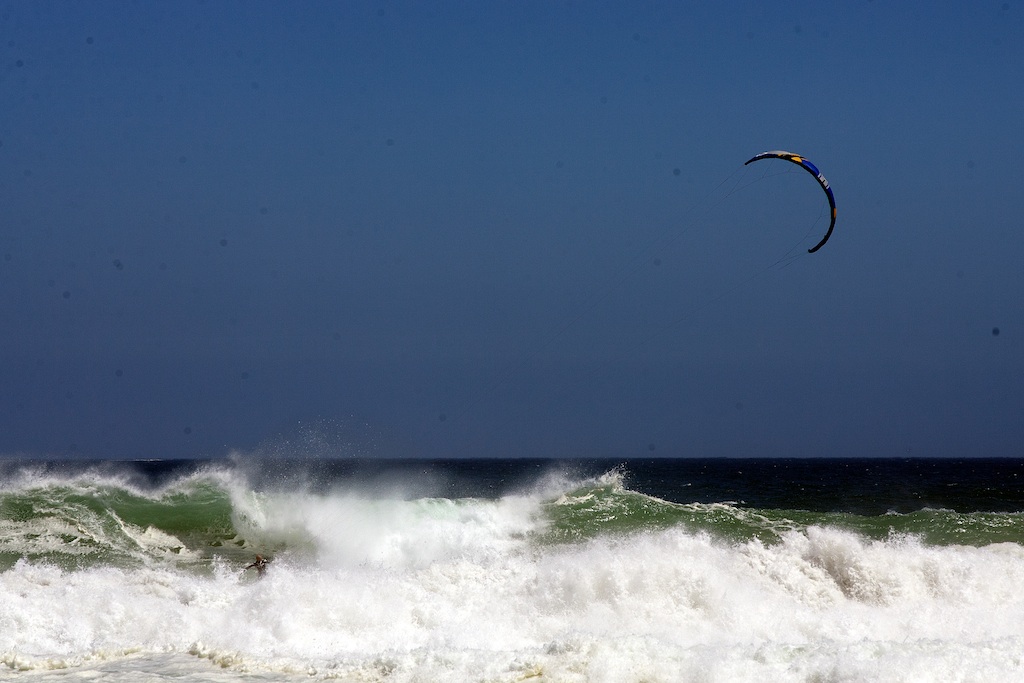
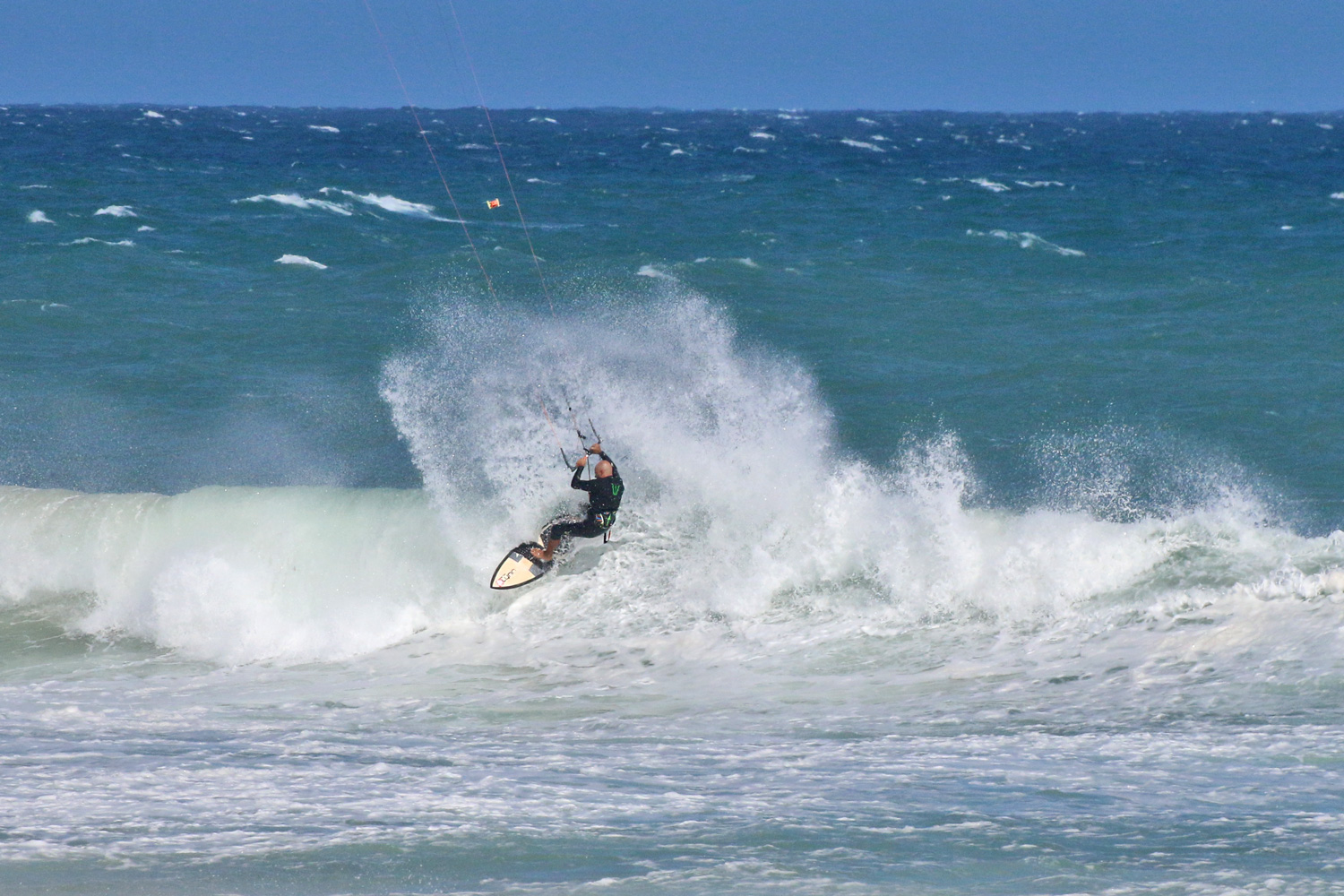
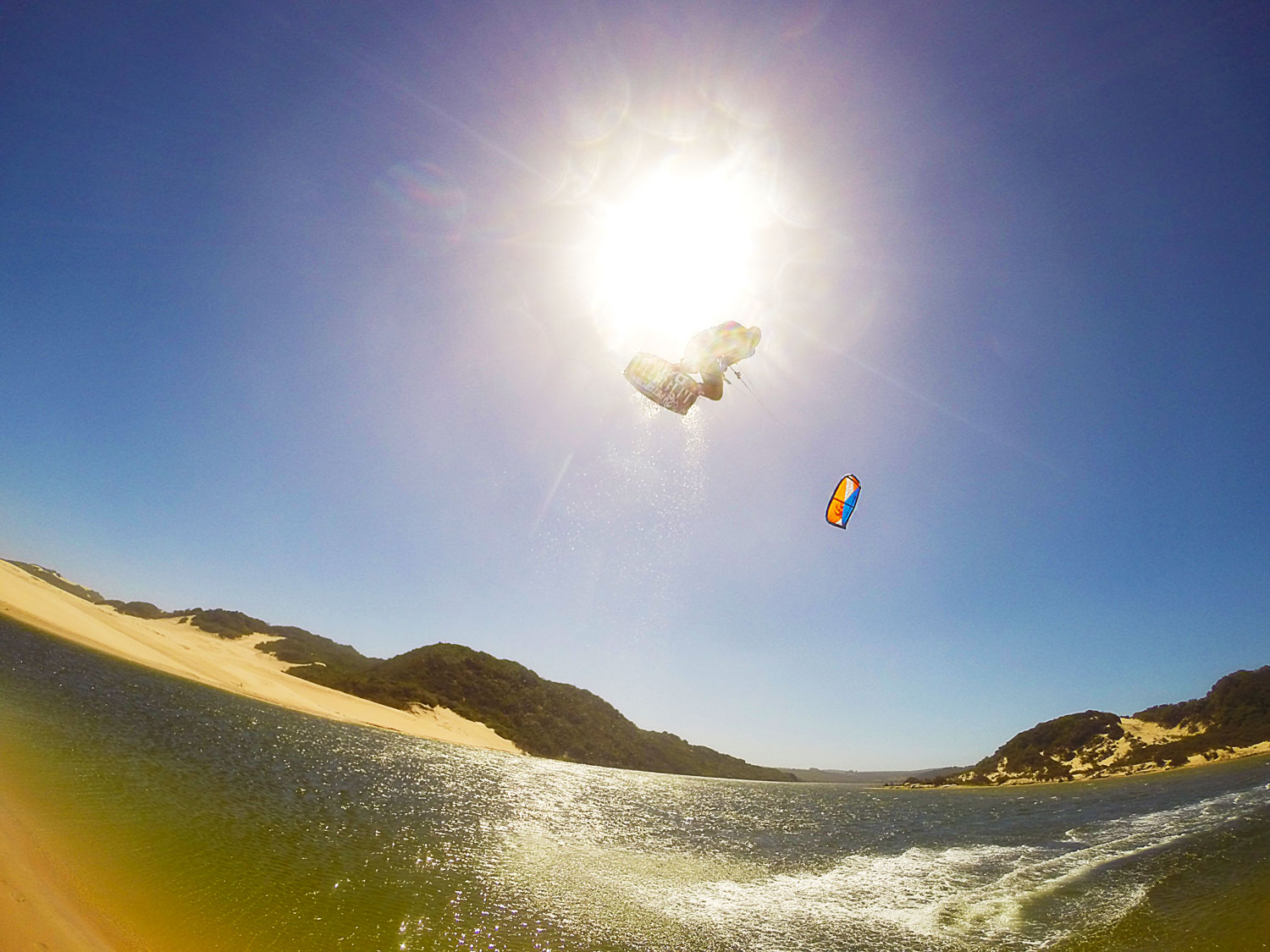
In October / November, we get pretty insane conditions on the East Coast of South Africa.

Strong winds from the left and the right, and big swell pull in regularly. This year was no exception.

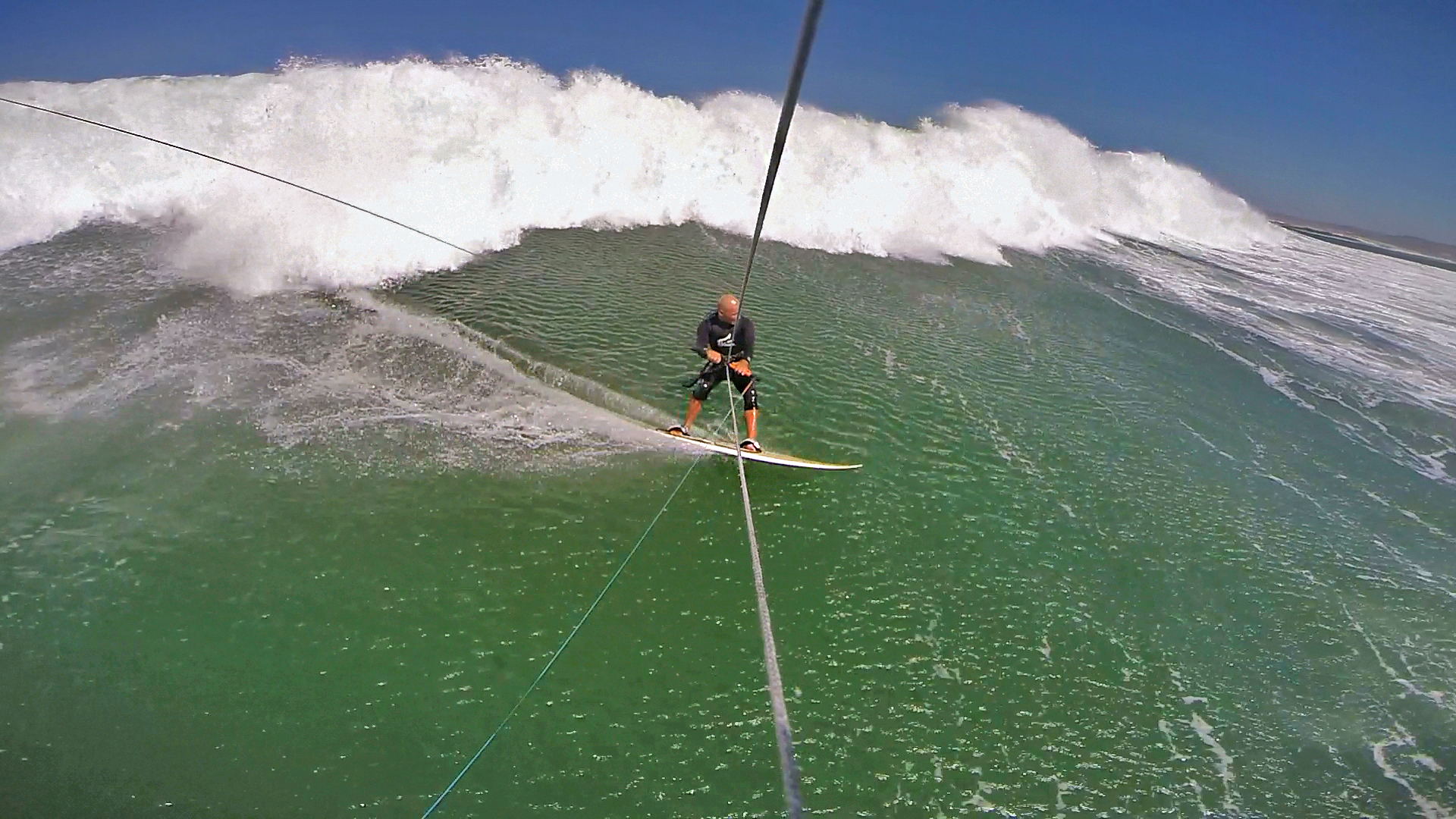
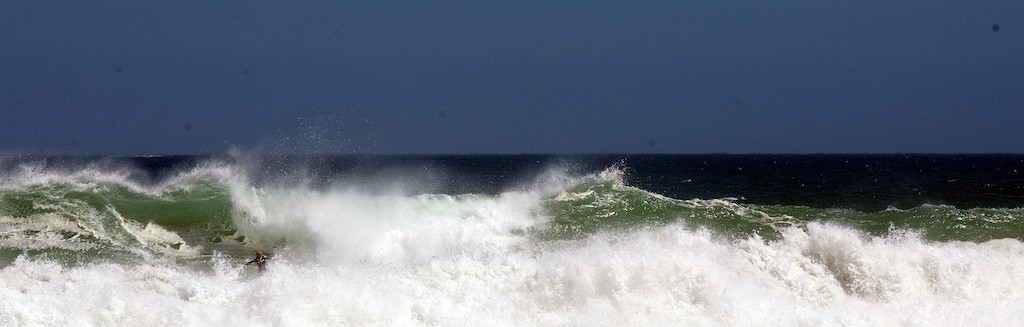
The spot featured in this video is not the friendliest, The waves are strong, there is a side current and lots of rocks downwind. Mistakes can have a heavy price. (a few destroyed kites here before). But the wave runs and is super powerful. It breaks of a rock outcrop to then run along these sand banks. The close out is very powerful and tricky to hit as it has a tendency to destroy you.

I have been surfing this wave for a long time, but it has to be way smaller than the swell on the video to be able to make the paddle out. Of course with kiting you manage to get over the white water and end up riding way bigger waves.

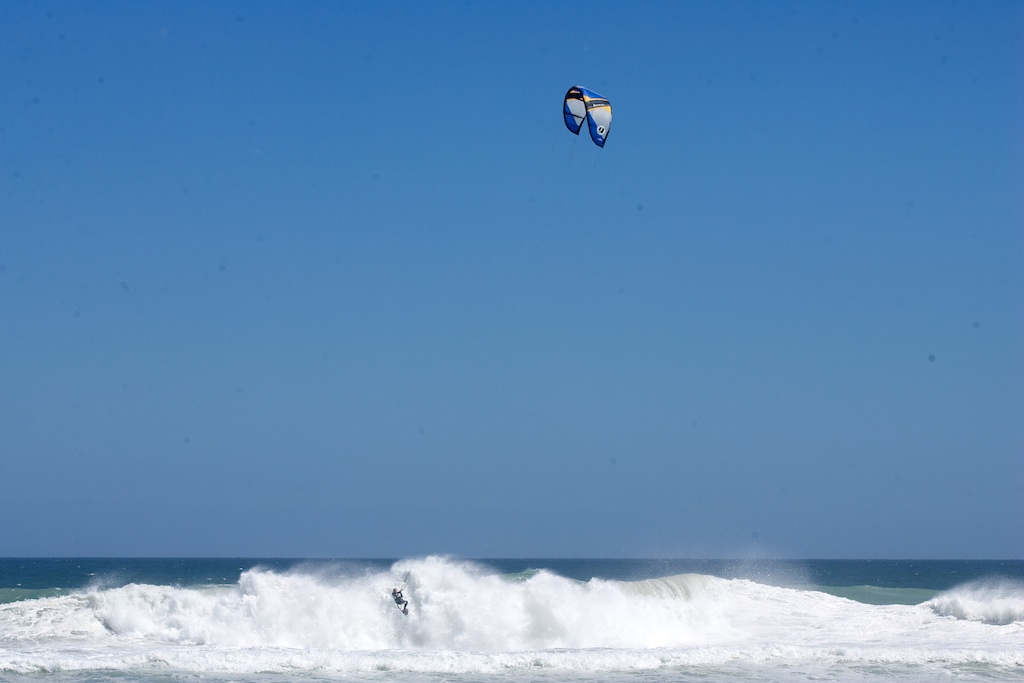
I always take a kite that is super reliable and relaunches quick. The Peter Lynn Kiteboarding Swell v3 is the perfect kite for this conditions. Not only does it relaunch super fast (you need to get it up before the next wave hits you) but it also drifts remarkably well. With such fast waves it’s super important.

Enjoy this little edit that kind of sums up what was a memorable Oct / Nov!


Ced

Action cam in Kiteboarding (part1): the cam, the specs and the housing

We’ve all been there; just got the action cam, the water casing the basic mounts.
So with excited anticipation, you charge it up, stick some old mini sd card you retrieve from an old phone, dig your old helmet out, stick the mount on, look at yourself in the mirror and think you look like the droid in star wars. But who care,  you are already dreaming of a far away galaxy where you will show the universe your most hardcore trick. You generally  have a little thought about “What if it comes off?” but brush it aside in the excitement. You spend a few hours trying to understand all the settings but invariably settle on just going with the high quality video. You can always lift the stills right?  and then wait for the first day of wind.

Then the day arrives, it’s blowing, you almost foaming at the mouth at the thought of getting your moment of fame in the pro kiteboarding video game, to getting showered with compliments and reaching god like status on Facebook amongst your admirers. You stick your Star Wars helmet on, switch the camera on, head out and ride like you’re competing in the red bull kind of the air final, until you are absolutely shattered.

Invariably, disappointment awaits you… Using an action cam and getting results is just not that simple. If it’s not lying at the bottom of the ocean maybe these next few blogs can help you.

I’m gonna try and highlight some stumbling blocks I have come across in the last few years dealing with the various aspects.

The Camera

As a rule of thumb, you do get what you pay for with the odd exception. I would say do some extensive research on the various models out there. There are some great sites where you can compare the various makes and models.

In a World of  WVGA ,720, 1080HD, K4 , things can get pretty confusing. Most people don’t understand the various formats and rightfully, it’s easy to get caught up on the technical jargon.
“Hey I should buy the new one cause it has 4K facility and can be operated by farting”
Well firstly can your computer can process 4K? Can your editing software (yes you will need that too) deal with it?  And farting will be a problem in 20 knots of wind (yes we are dealing with action cams in a kiteboarding setting)

So my advice with regards to specs, is also look at the stills options, resolution, burst frame capabilities and overall quality of still shots. I will highlight later why that is also important.

The latest cameras claim to have stabilisation which is a very exciting prospect as it is the most annoying aspect of the action cam footage. I haven’t tested it personally but look forward to it (once money grows on trees)

The cam probably also didn’t come with an SD card. And your choice of SD card will be crucial to getting the most out of the cam. It has to be class 10, but the faster the better. Don’t skimp on this. It would be like putting retreaded tyres on a formula one car. Get the biggest, fastest that you can afford. Nothing worse than your action cam freezing up in those perfect conditions cause you wanted to save a few bucks.

The Settings

Video:

The first question you want to ask yourself is what are you planning to do with the footage?
The Second one is what are you going to use to view /Edit the footage on?
For example if you planning to do semi pro work with slow motion shots, a high frame rate is important (60fps) If you planning to show it to your buddies on the company big screen, resolution (HD 1080 or more) is important.
The latest action cams tend to really offer some amazing performance, but knowing what you want to do first and your hardware limitation is important for your settings.
The best quality is great but not always best suited for what you want. For example slow motion shots need higher frame rate rather then size to get a smooth finish. There is a lot of info out there on all this from people who know way more than I do. Go looking!


Photo:

Yes photos are cool. Let me say that again, Photos are COOL! I see so few people taking pics with their action cams and it’s a real pity. They are easy to share, easier to edit and enjoyable by all on many platforms.
To make videos cool, you need it to be steady, to edit, to put some music to it and to have a lot of angles, you need time.  Photos are way easier and quicker to deal with, they are however more difficult to set up. Specific post on that coming up.
But for the settings go with the highest resolution available if you are using stills settings.
You can look at lifting stills from 4k video, but again generally you need to know what you are going after first.

Dealing with the water housing

Lets get this out of the way: Action cams get hot when they run, the air and water around it is colder, this will always result in condensation. I’ll be very surpised if it didn’t happen on your first run. I’ve come across a lot of internet tips some less practical than others: use a blow-drier to get the moisture out (we all have one of those lying around just before heading out), Keep your casing in the fridge (try that in the african sun) Blowing on the cam if condensation occurs (try that when it’s on a line mount)

However, anything which can help absorb condensation in the casing is good. You get little rectangle moisture absorbers, if you don’t have any anti fog inserts, fold toilet paper and stick it in.
If the cam has been lying in the sun or in the heat of the car, I open it up and air it out before launching (with dry hands, Wet hands are a killer!). This equalises the inside and outside temperatures.
Another way of avoiding condensation during operation is to switch the cam on and off, and, of course, if it has a back screen make sure it is off. Not only does it produce more heat but it also chews the battery up.
The more heat it produces the worse it is. Using wi-fi also causes more heat but is a necessary evil when operating via remote. Also be gentle with your casing when opening and closing. I replaced my plastic clip with an aluminium one to avoid frustration on the beach with broken plastic clip.

And get a floaty door, Cause if it does come off and the safety leash of the cam breaks you have a better chance of spotting it on the surface or of it washing up on the beach. However be warned, on some line mounts, you’ll have a struggle fitting it with a floaty door (more on that in a later blog)

Next blog will be about the various options of where and how to set up your cam.

Dealing with Big waves

GOPR5741-1

It has always been in the nature of mankind to push the limits. Further, faster, stronger, and also bigger. Although for a majority it means their waistline, I suspect that people reading this post would be more likely thinking along different lines. kite lines perhaps?

So this time we are talking waves.

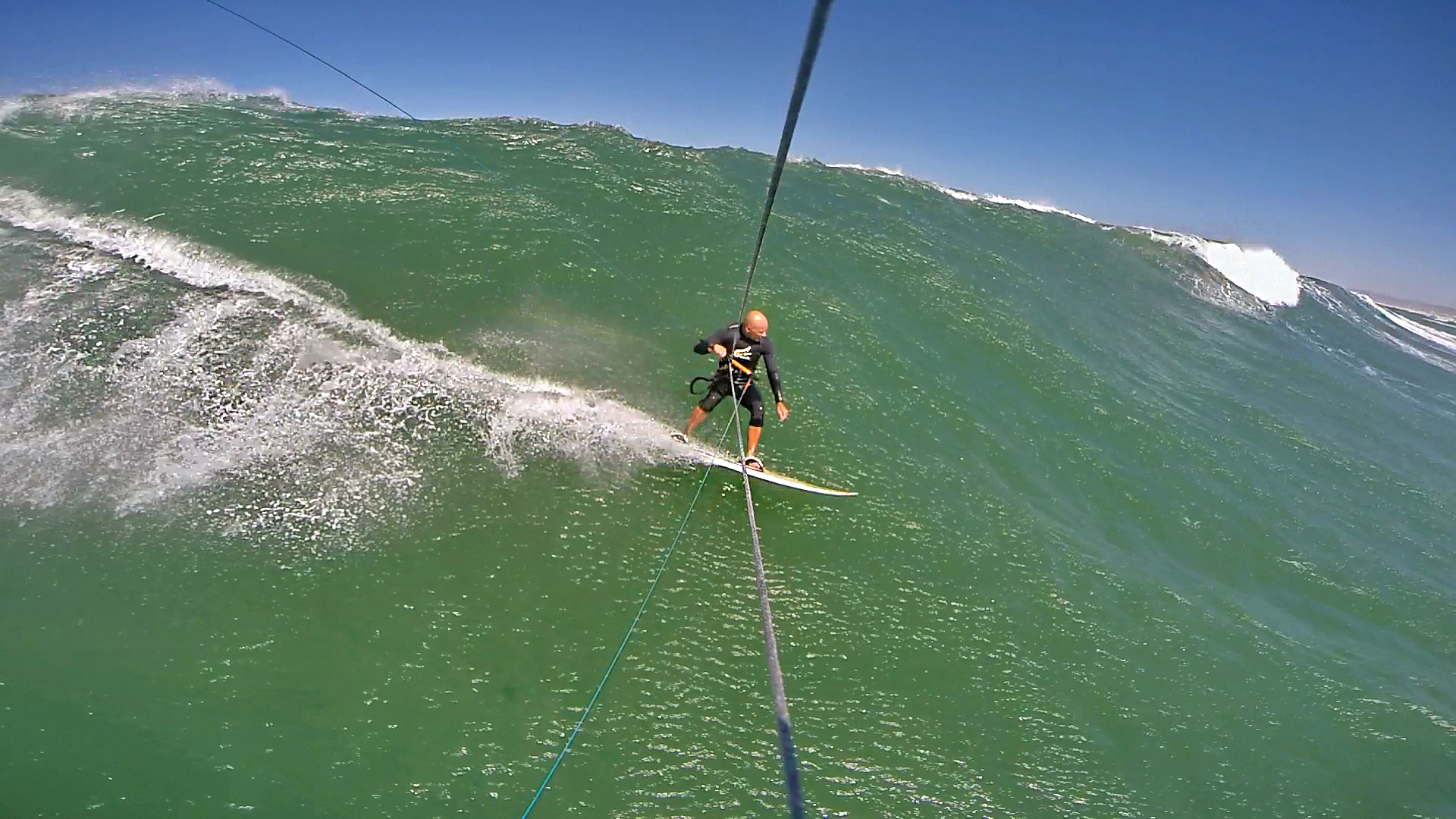
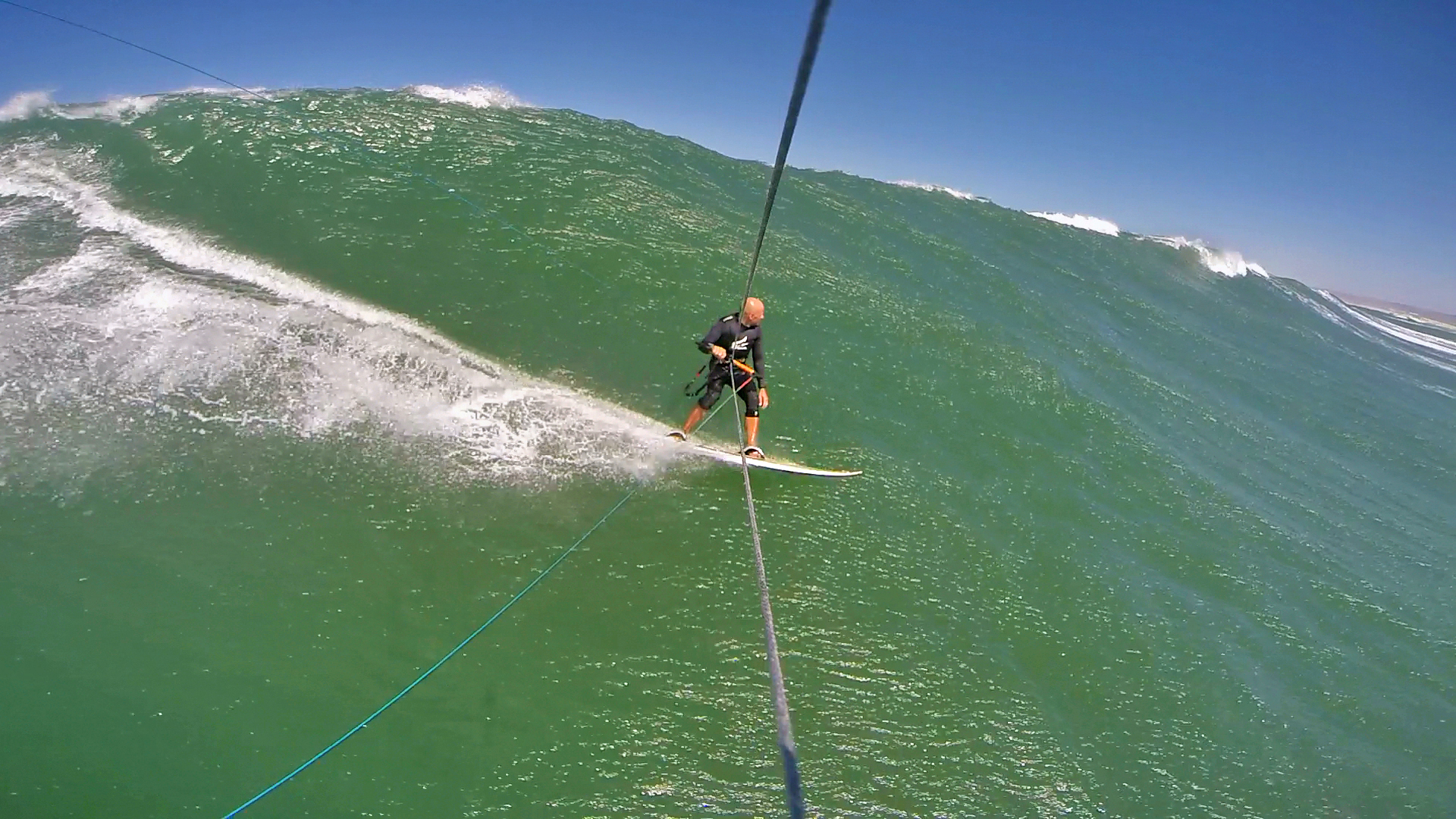
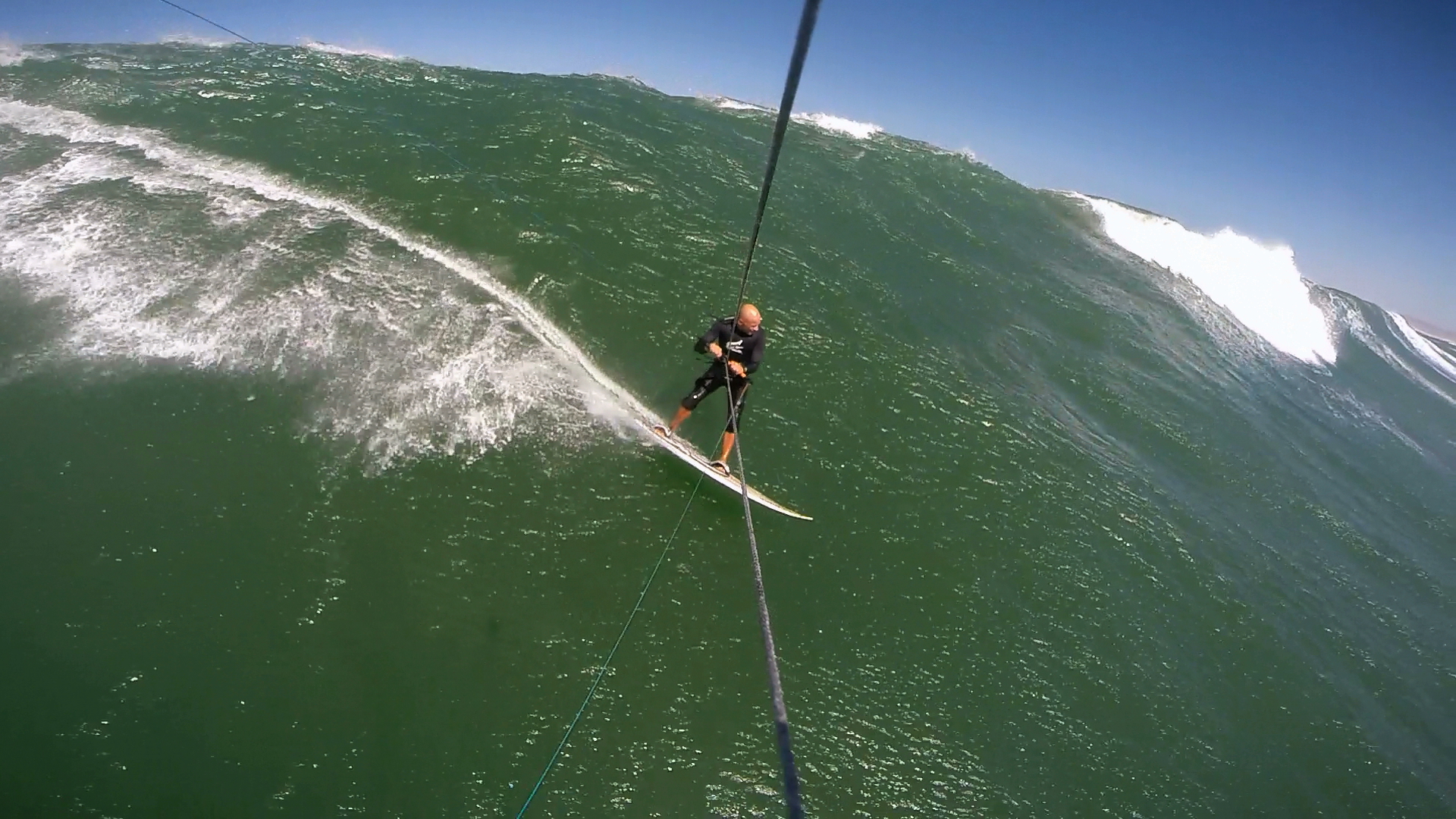
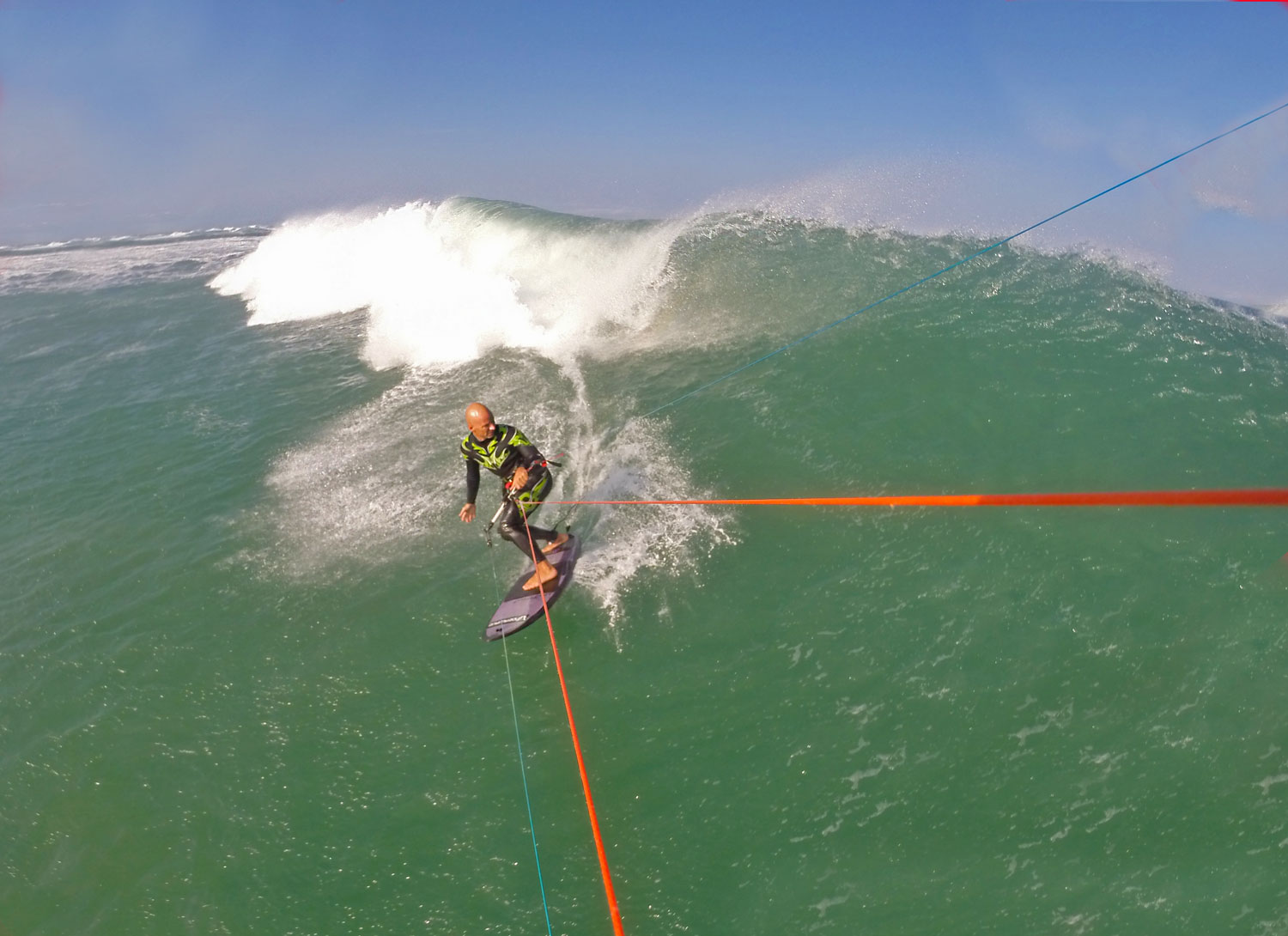
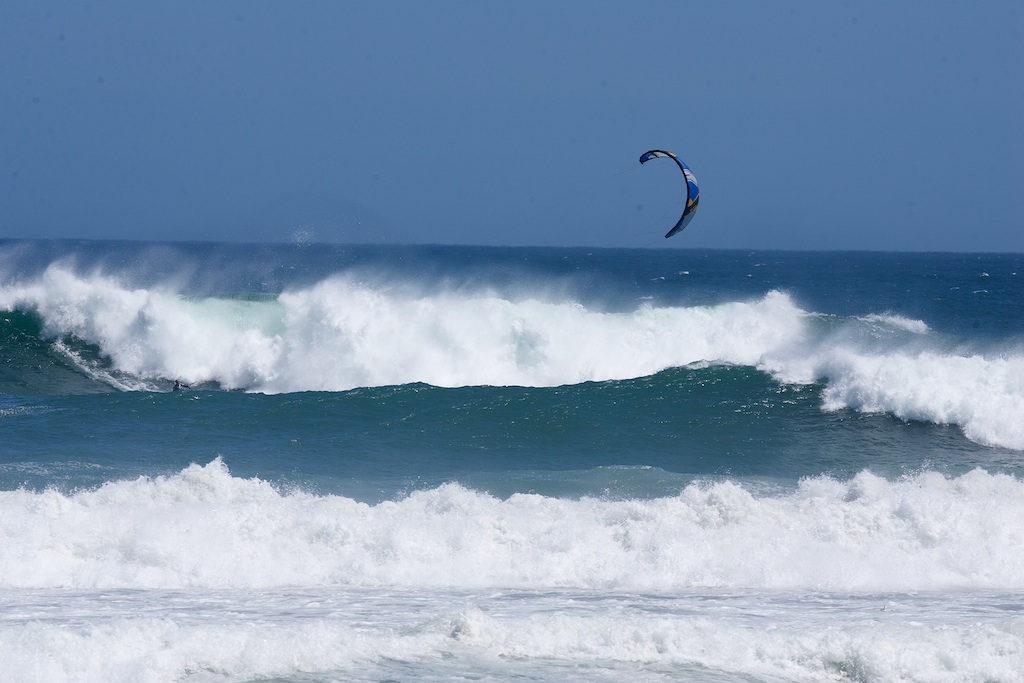
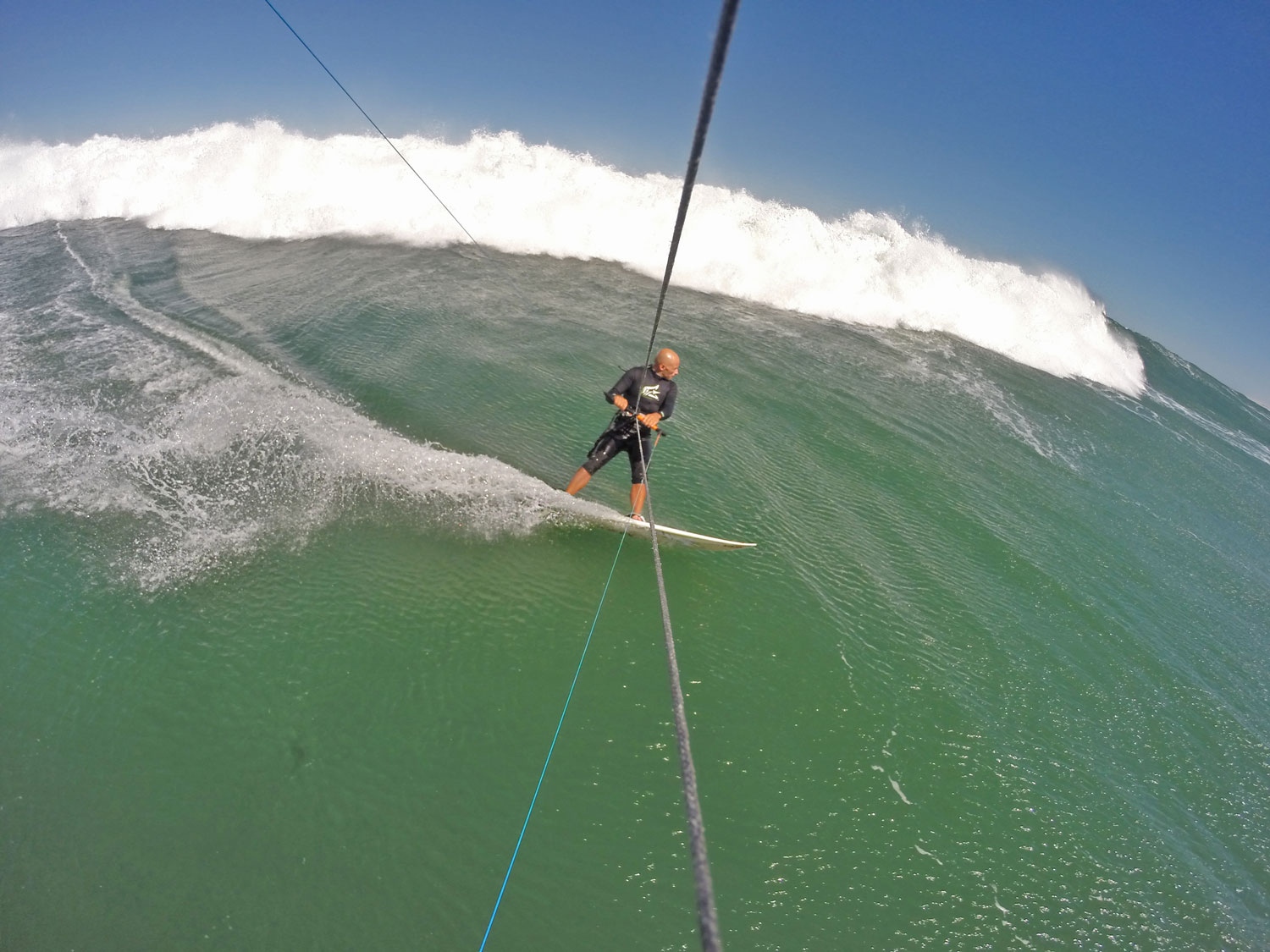
In the last 3 weeks I had two sessions is some pretty big waves. It sparked the idea of sharing some thoughts and experience on the subject.

Whether it’s bodysurfing, body boarding, wave skiing, supping, long boarding, surfing or kite surfing, few will deny the fact that the bigger wave is always the more exhilarating ride. But how does one approach big waves?

I do not profess to have the ultimate experience in big wave riding, there are a multitude of kids in places like Hawaii who have much bigger balls than me and perhaps more frequent outings in massive surf, however I can vouch that I have a fair amount of experience dealing with big surf on my own and with no immediate help nearby.

For the purpose of this blog we will define a “big” wave as follow:

“A wave that has the potential to put your life at risk by either keeping you under or knocking you unconscious. ”

So how does one face these exhilarating monsters. Perhaps the following advice will allow you to shortcut a whole lot of painful real life experiences (mostly due to having gone through them myself and having been lucky to come out alive)


Conditions

Big waves can come in all kinds of shape and form. From messy wind swell to solid ground swell. It can crumble from the top or tube top to bottom. And of course in the context of kite surfing with all kinds of wind conditions altering the wave face and the way the wave breaks.

Always try and understand the conditions as best you can before heading out.

Choose a kite size where you will be properly powered and start by having a few test runs before dropping into that pit.

In my opinion, rather be overpowered than underpowered.

Personally my worst scenario is a cross onshore fickle wind, underpowered with big swell. As far as I am concerned, a recipe for disaster.
GOPR5741b

Equipment set up

This is how I would personally set up my equipment:

No board leash

Kite leash to be removed. If necessary for some reason, attach it to the front of the harness so it is easily reachable.

I would say a floatation vest is a must. When you getting tumbled, you can easily loose your sense of up and down. the life vest doesn’t.

Straps/ No Straps: This is all dependent on conditions. Most people would amaze themselves at how big a wave one can get over without straps. The decision is not so much about size (although when its crazy big there is no doubt that straps are a must for safety and enjoyment) but more about the wave face conditions which is generally linked to the direction and strength of the wind.

Cross-off shore tends to clean the wave face where a cross-on makes it more bumpy.

Of course different experience levels will also mean that your “strapless comfort zone” will increase or decrease.

If it’s crazy big, long lines will allow your kite to sit above the potential wind shadow of the waves.

Make sure you have tried and tested equipment out there and know your release mechanisms intimately.
G0109311E

So what if something goes wrong

First thing to do is NOT PANIC.

Assess the situation as quickly as possible and stay level headed. Time is generally a key element to your survival.

The number one rule is to keep your lines tensioned and the kite in the air.

Kick the board away from you to avoid collision.

If the kite drops in front of the white water get away from your lines and release everything

If the kite drops behind the wave and you are not getting dragged, you generally have a few seconds to see if you can re-launch it, but always be ready to release everything.

The most dangerous thing is the lines wrapping around parts of your body. So releasing is always a better option…

It is obviously super important to understand and know the difference between a fun big wave, and a big wave that can do serious damage. We all have different experiences and perspectives.

A few of my kite-mares in big waves have included almost losing consciousness after hitting a oncoming lip on a mistimed jump, getting anchored to the bottom by my kite lines wrapped around my hand whilst foolishly trying to rescue equipment and getting dragged under water for a good while and unable to release. But level head and some luck got me out of those.

But even if big wave riding has some dangers associated with it and is not for everyone,  it is one sure way to get an adrenaline fix and your blood pumping!
025055

G0045854E
024903GOPR5741-2024963 GOPR5741